


Everyone in Massachusetts should know their ticks. Being able to identify a deer tick versus a dog tick could mean the difference between having to visit the doctor or breathing a sigh of relief. Ticks are on the move right now and it’s expected to be an active season.
In Massachusetts, the two most common species are deer ticks and dog ticks, here’s what you need to know.
Dog Ticks
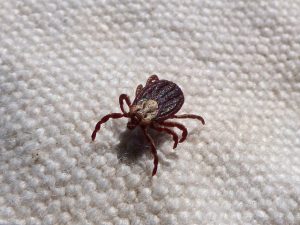

What do they look like?
Dog ticks are much larger and easier to spot than deer ticks.
When are they active?
The dog tick adults and larvae start hunting (or questing) for hosts in April. The nymphs become active in May. They continue searching for hosts until the weather cools in the fall.
Where are dogs ticks found?
Dog ticks are found in areas with little tree cover. They like to hang on blades of grass and wait for a host to brush by. They are typically found in fields, hiking trails, and yards.
They can be found on all sorts of hosts from mice to deer. Some of their favorite hosts are raccoons, so if you notice a lot of racoons in the area, there is a good chance dog ticks are present. However, the dog tick can survive up to two years without a host!
Are they dangerous?
Dog tick nymphs and adults can transmit diseases such as Rocky Mountain Spotted Fever and Tularemia, BUT these ticks are much less likely to cause harm to humans. In fact, only 1 in about 200 are likely to carry harmful germs and bacteria.
Deer Ticks


What do they look like?
Deer ticks are smaller and not nearly as easy to spot as a dog tick.
When are they active?
Adult deer ticks are active from October to May, as long as the weather is above freezing. Deer tick nymphs are active May through August.
Where are deer ticks found?
Adult deer ticks are in search of large hosts. They prefer to be up higher off the ground and will hang out on the branches of trees and shrubs. For humans, they are typically found at “knee-high” heights. While they are looking for deer as a host, they will readily attach to dogs and humans.
Are they dangerous?
Yes. Roughly 1 in 4 deer ticks can harbor dangerous illnesses and diseases like, Lyme disease, Babesiosis, and Anaplasmosis.
What to Do If You Are Bitten By a Tick
If you notice a tick has embedded itself in you or a family member, knowing which kind is important.
Dog Tick: If the tick you remove is a dog tick, chances are you will be fine. It’s still a good idea to save the tick and follow up with a doctor. You may need a round of antibiotics to fight off any minor infections.
Deer Tick: If you are bitten by a deer tick, you’ll want to seek medical attention for sure. The possibility of illness is still low, but much higher than that of a dog tick. Be sure to save the tick, after removal, and record where you were bitten.
To learn how to properly remove a tick, click here!
Prevention: Start Today!
When it comes to dog or deer ticks, prevention is the best possible guard against possibly getting sick. If you are heading outdoors, wear clothing that protects your legs and arms. Also, spray tick repellent on your skin and clothes.
It’s a great idea to invest in a tick treatment program. Also, keep your yard trimmed and maintained. Ticks love long grass and piles of leaves!
Don’t forget about daily tick checks on you and your pets. If you are bitten by a tick, you’ll want to act fast to prevent any infections.
To get started with a professional tick treatment program, contact Backyard Defenders today!